SRS-DMPC: Structured Risk-Sensitive MPC for Quadrotors in Disturbed and Constrained Environments
Abstract
Unmanned aerial vehicles are increasingly required to operate in constrained and wind-disturbed environments, where safety assurance demands precise and robust pose control. To address this challenge, we propose a structured risk-sensitive disturbance-compensation model predictive control (SRS-DMPC) framework. Unlike conventional disturbance-compensation MPC (DMPC) or uniform risk-sensitive DMPC (RS-DMPC), SRS-DMPC allocates heterogeneous risk attitudes across dynamic channels, enabling the controller to dynamically prioritise safety-critical states and reallocate control authority under uncertainties. Meanwhile, an Adaptive Kalman Filter (AKF) is employed to quantify and propagate uncertainty in real time. High-fidelity Gazebo simulations show that SRS-DMPC reduces position tracking error over baseline DMPC and RS-DMPC, and more importantly, remains stable under severe wind disturbances where both baselines fail. Real-world flight experiments further demonstrate that SRS-DMPC achieves the highest tracking accuracy, with a 13.0% and 26.6% RMSE reduction over RS-DMPC and DMPC, while ensuring safe operation under the external unknown wind where both baselines fail. These results highlight SRS-DMPC as a robust and practically deployable control strategy for quadrotors in uncertain and safety-critical environments.
Proposed method
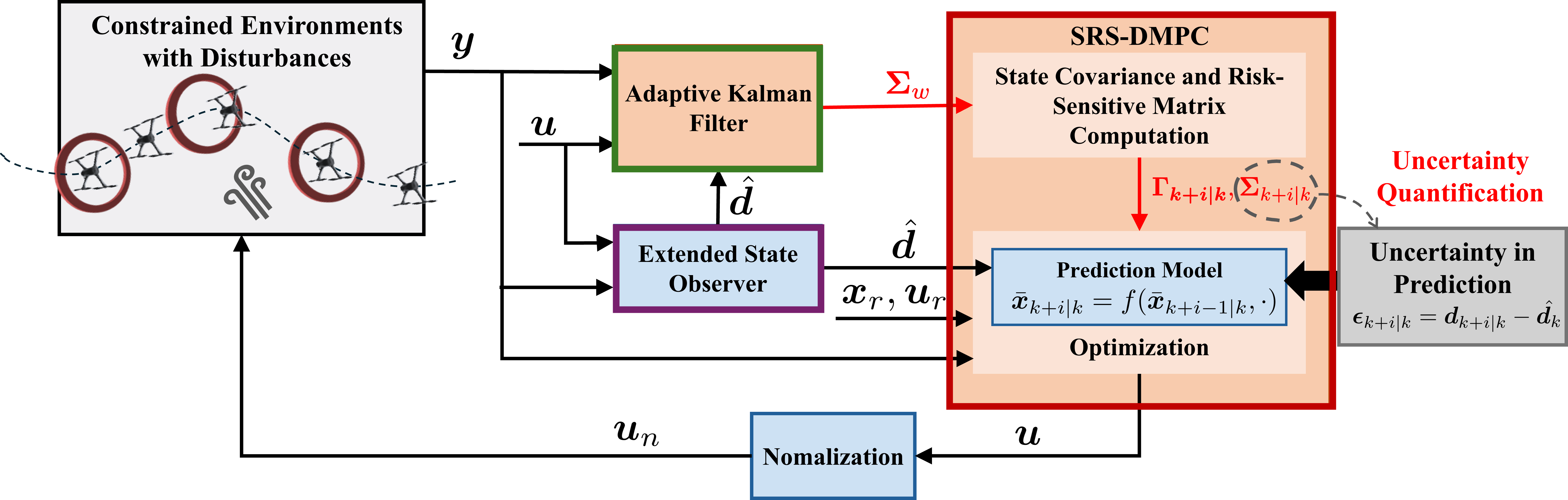
Uncertainty Quantification and Rejection
- Incorporate disturbance compensation into the prediction model and address the underactuated nature of quadrotors by assigning heterogeneous risk sensitivities across different state channels.
- Employ an Adaptive Kalman Filter to dynamically propagate uncertainty and adjust risk allocation online.
SITL Simulation
Simulation setup
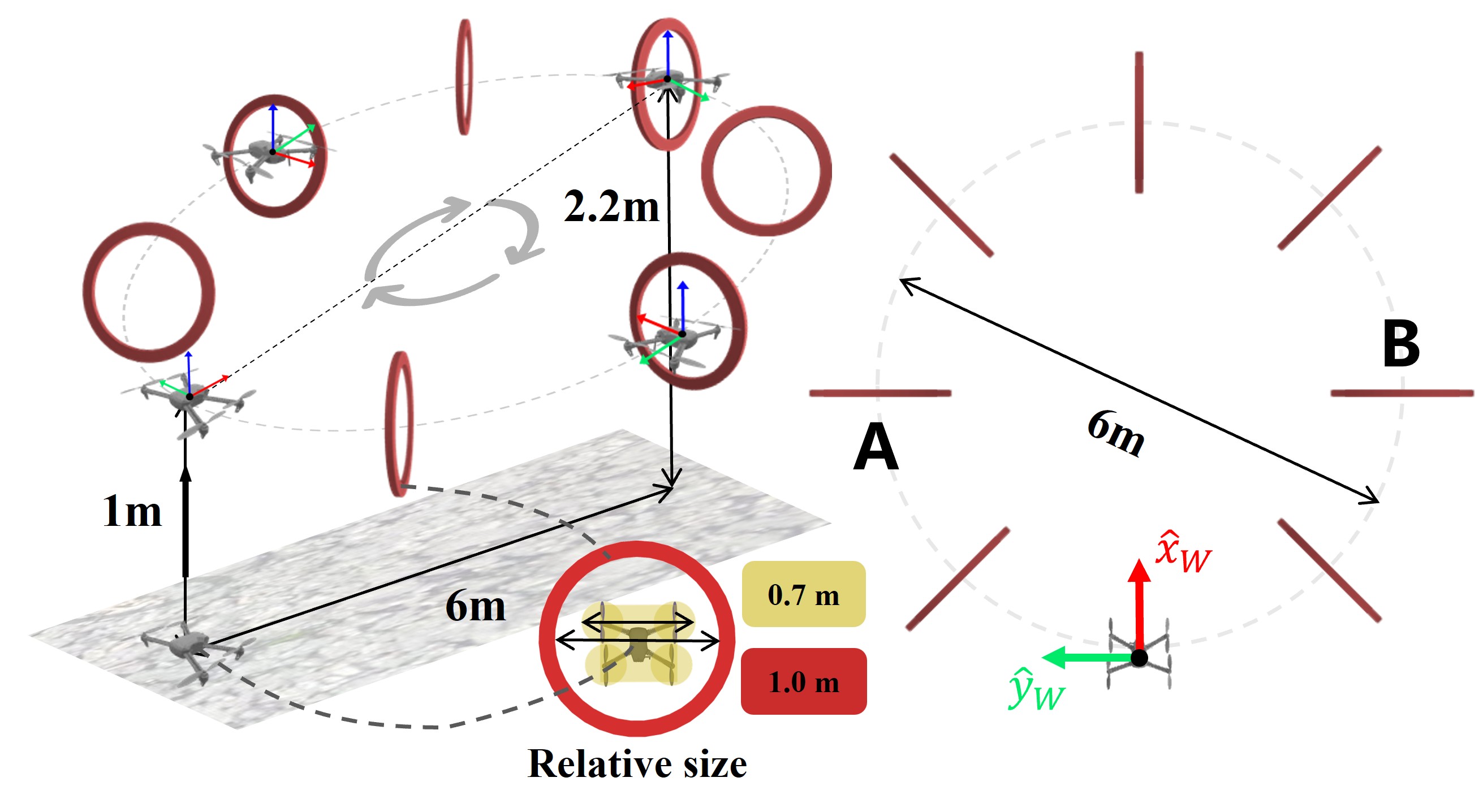
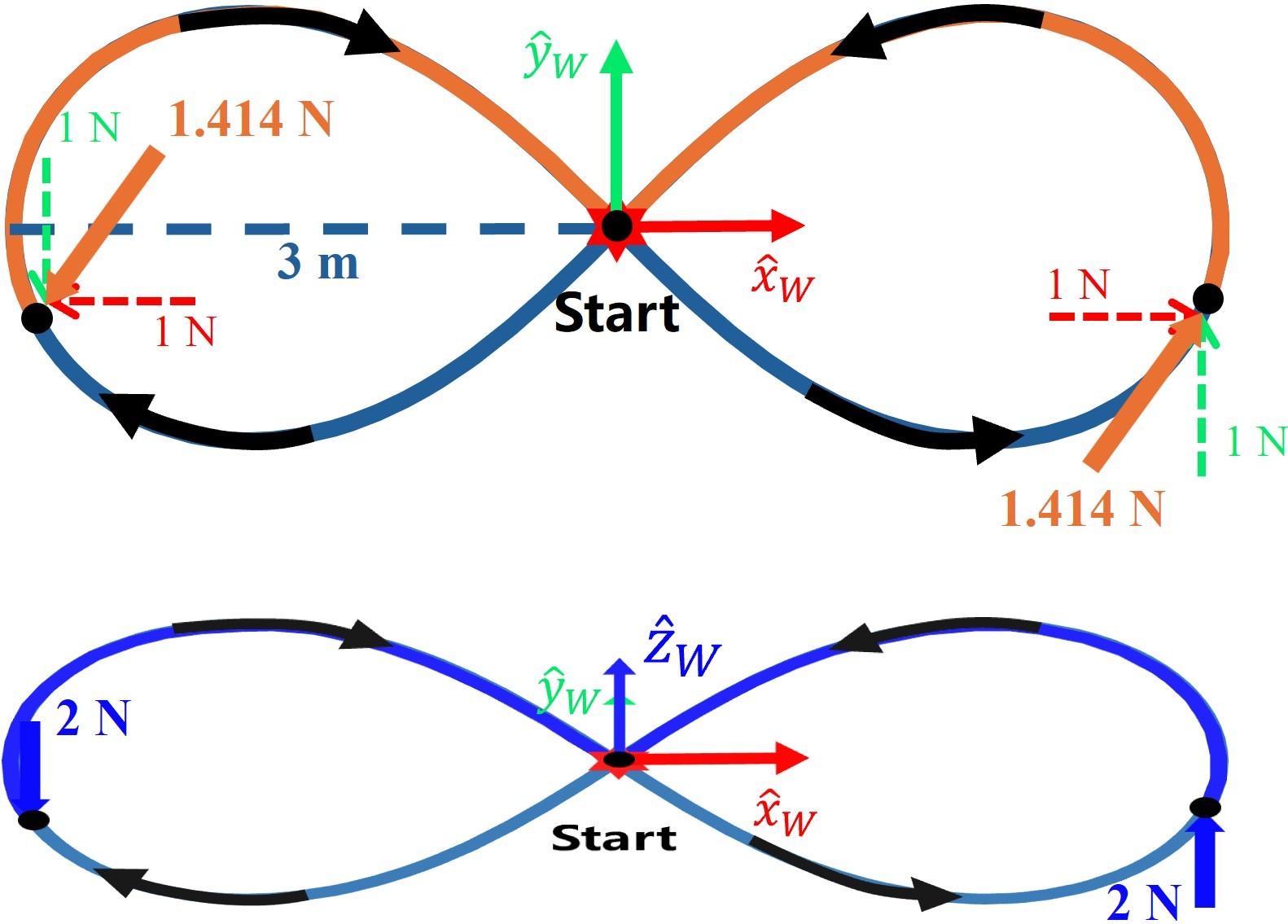
Left: Designed trajectory of Simulation 1 in Gazebo. Sudden wind disturbances are applied at positions A and B to assess algorithm robustness. Right: Lemniscate trajectory and external force disturbance setup of Simulation 2. Upper: Lateral force case, the orange segments denote the trajectory portions where lateral forces are applied. Lower: Vertical force case, the blue segments denote the trajectory portions where vertical forces are applied.
Real-world Experiment
Real-world setup
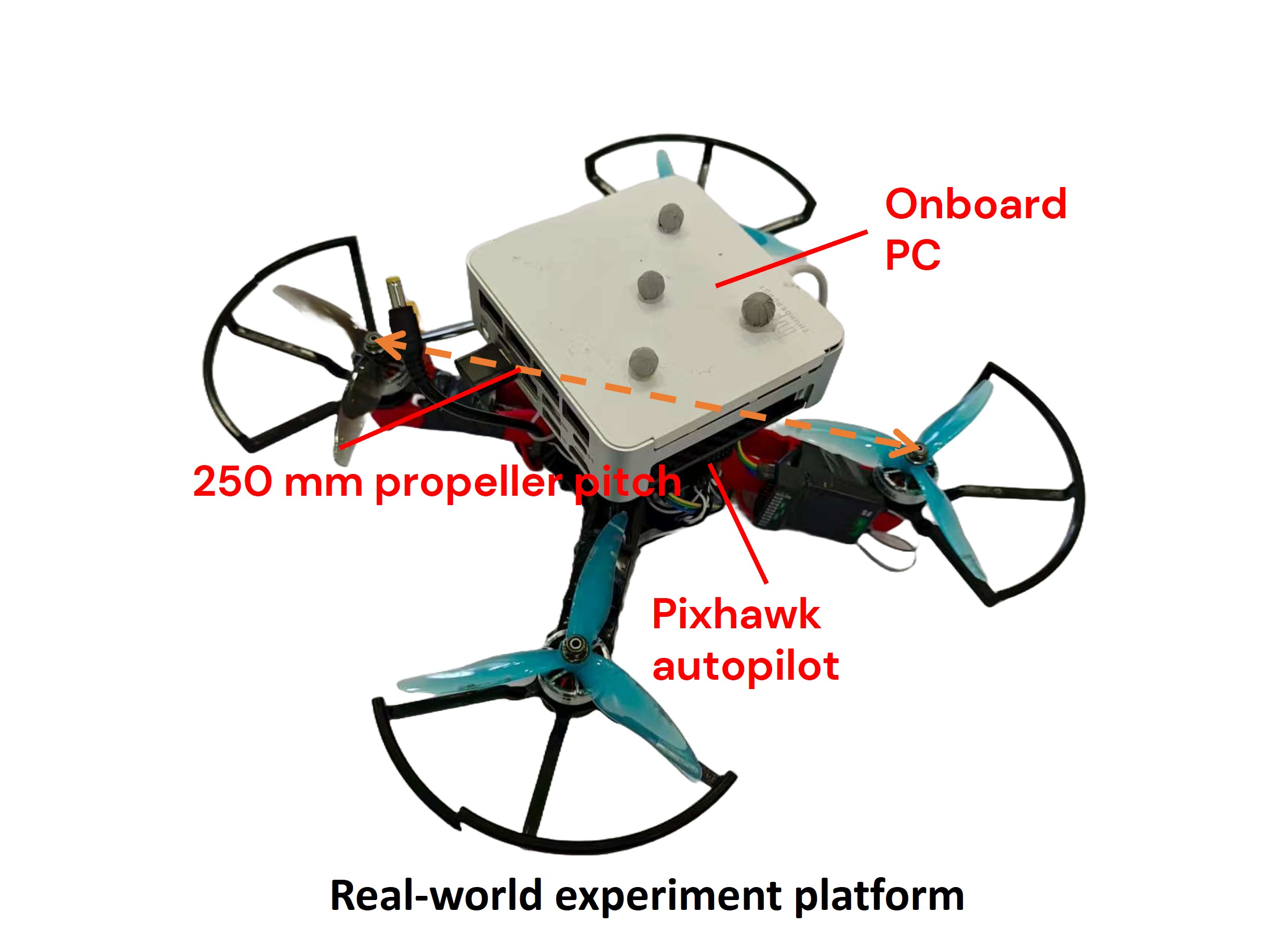
Real-world quadrotor experimental platform.
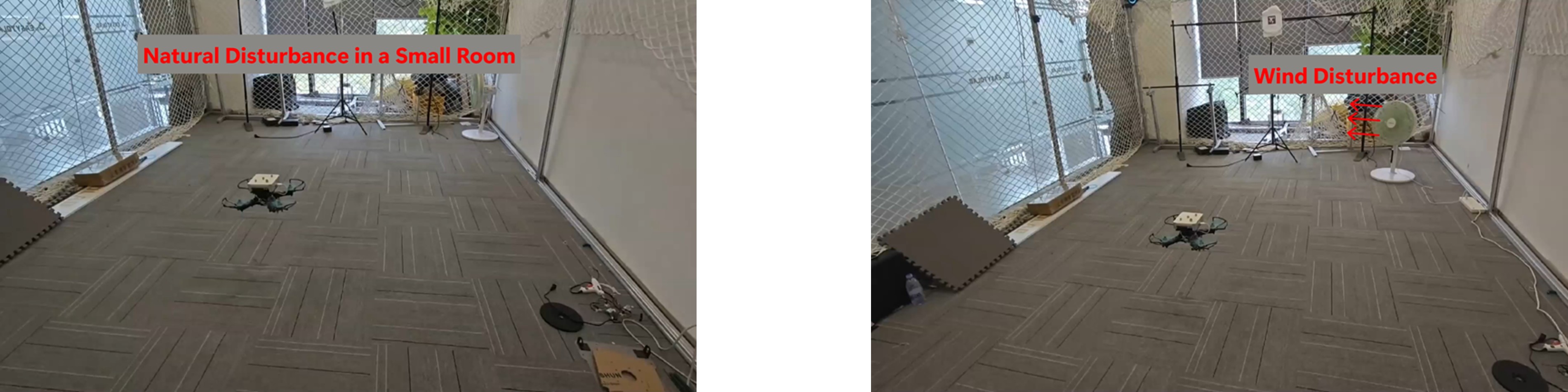
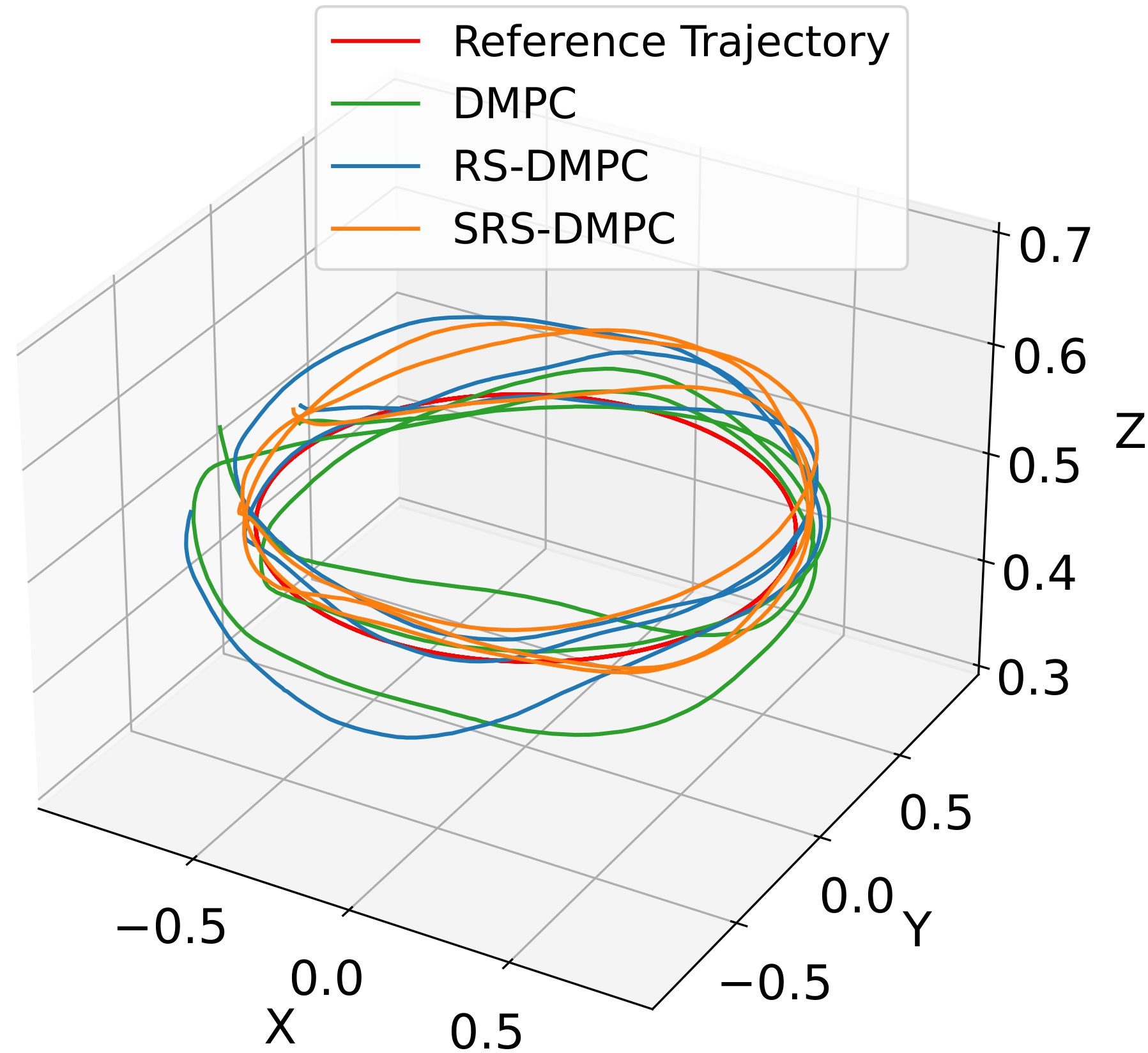
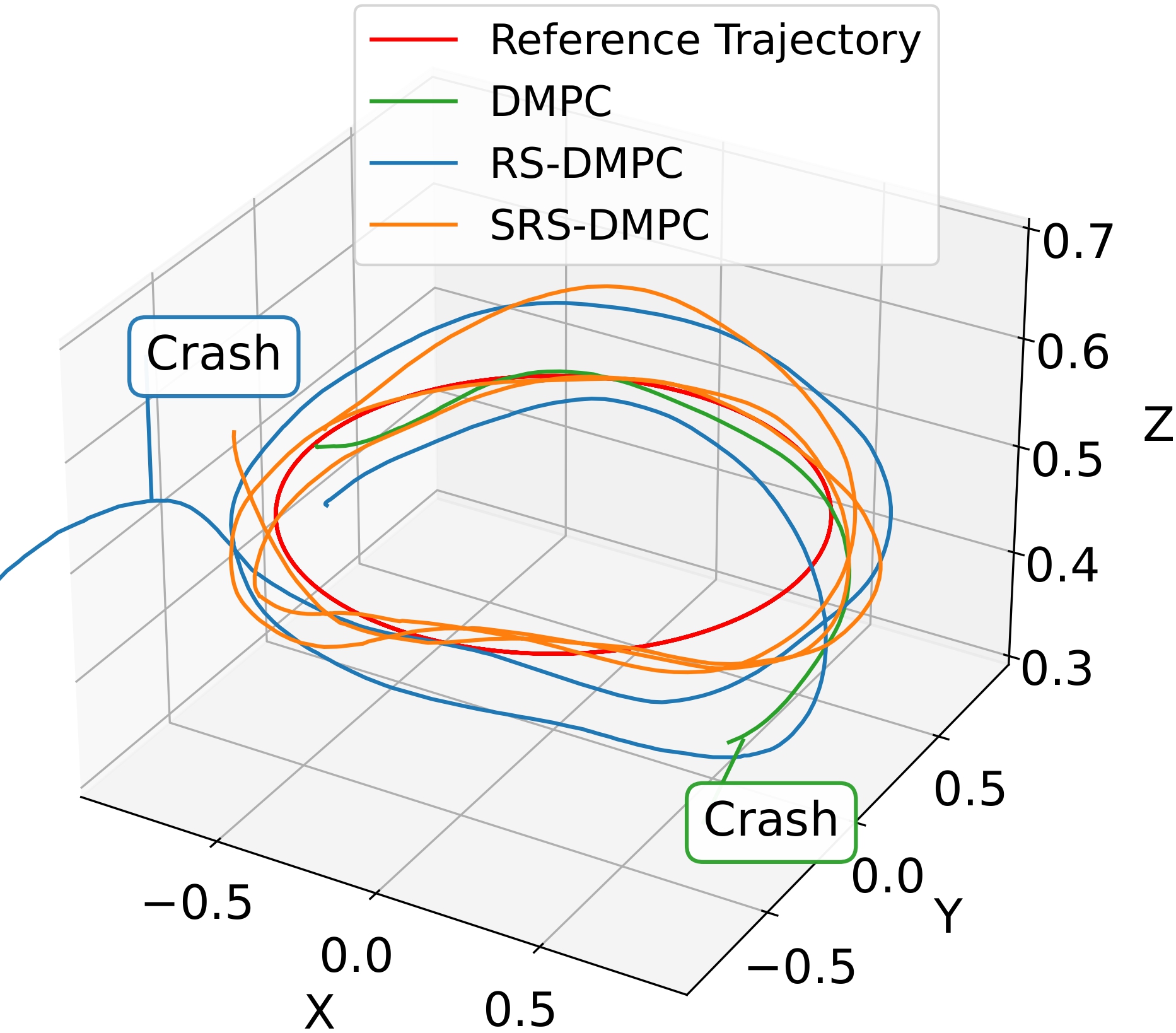
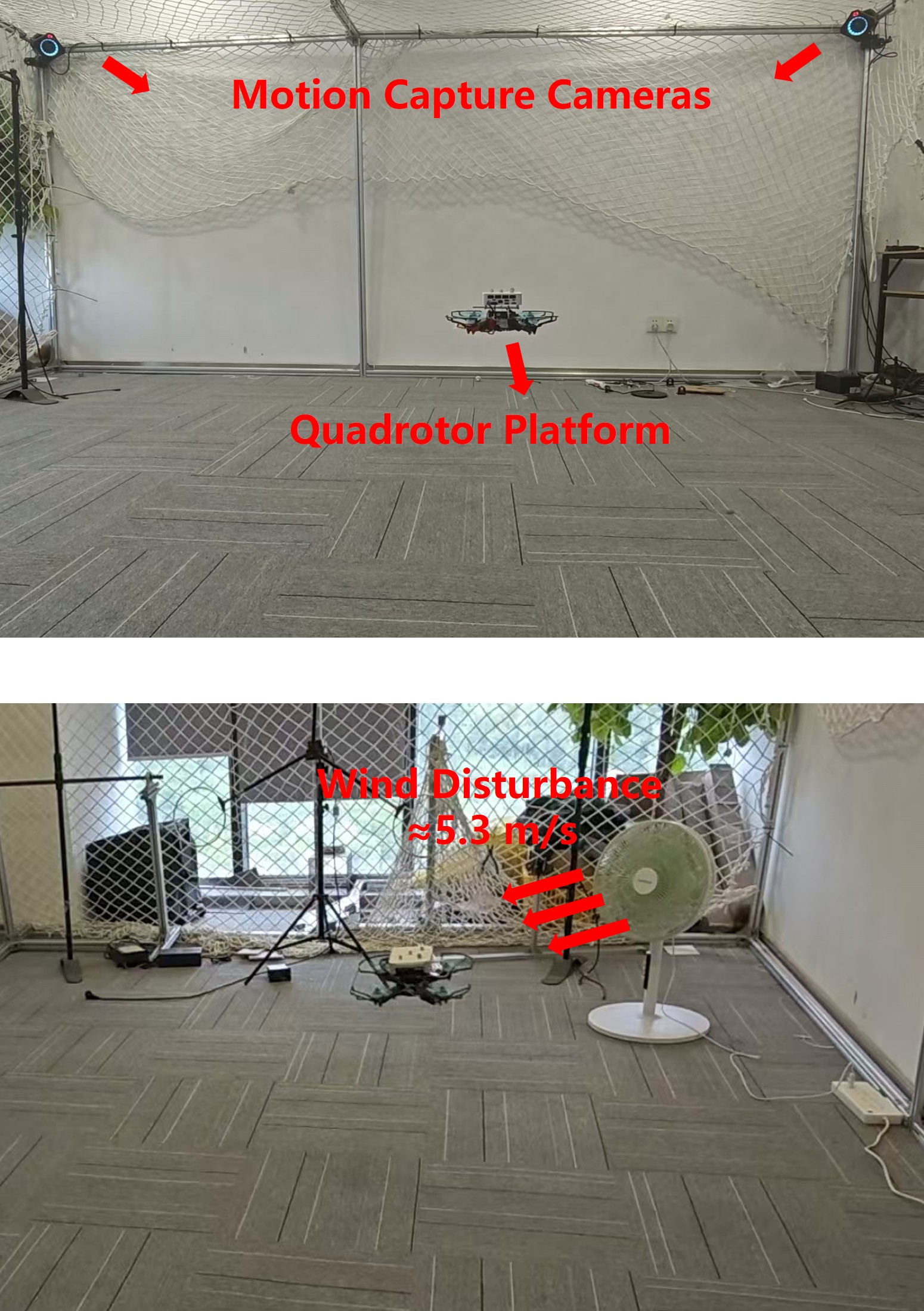
Real-world experiment setup. Left: ND case, Natural disturbances (ND) from unknown thrust mapping and airflow effects within the confined space, without external disturbances. Right: In addition to ND, wind disturbances (WD) were introduced using a fan at one corner of the arena, producing a mean wind speed of 5.3 m/s.
Trajectories in real-world experiments